

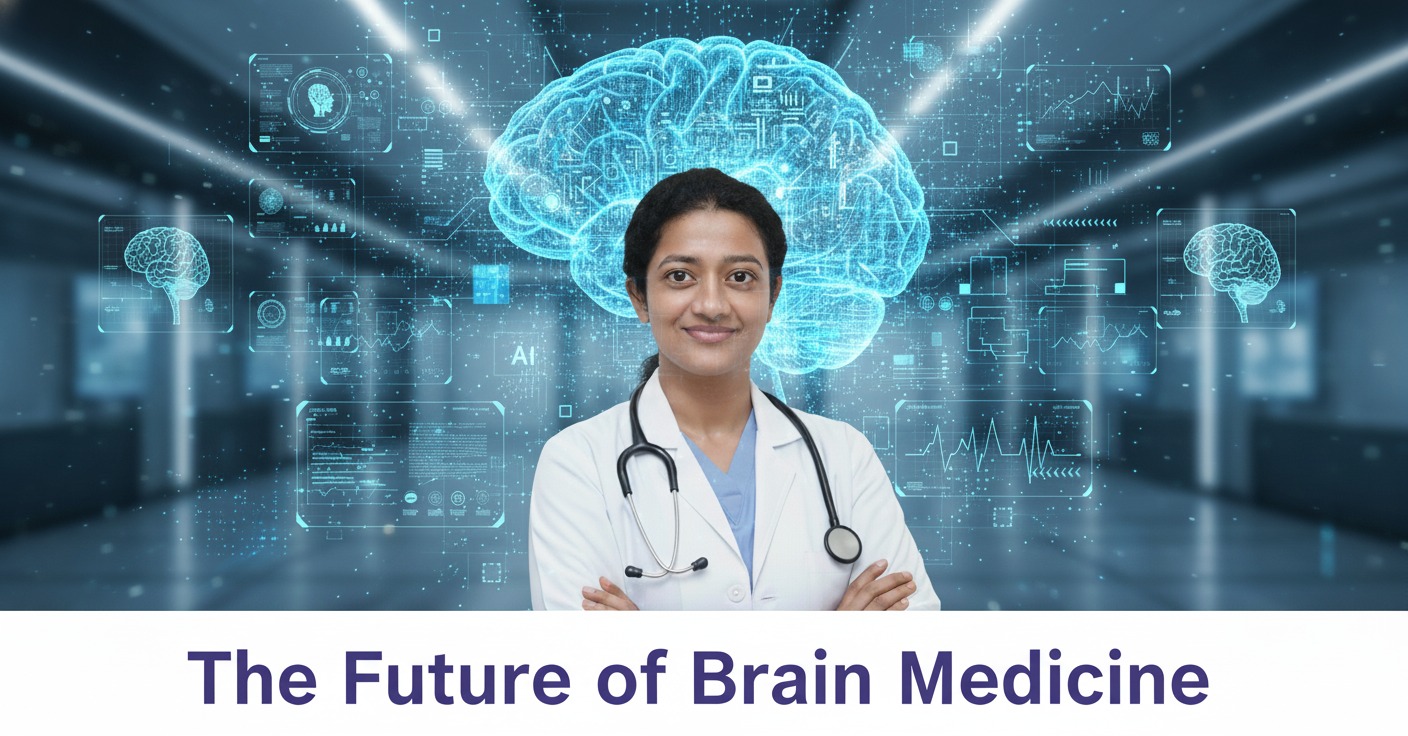
The human brain is the most complex organ in our body, a biological supercomputer made up of billions of neurons that control everything we think, feel, and do. For centuries, scientists have been fascinated by how it works and how we can repair it when things go wrong.
Today, we are entering a new era in brain medicine, one where technology and neuroscience work together to restore, enhance, and even extend the capabilities of the human mind. From neuroprosthetics that help paralyzed patients move again, to mind-computer interfaces that allow thoughts to control machines, the future of brain medicine is full of incredible promise.
In this blog, we’ll explore the exciting developments shaping the future of brain health explained in a simple way that even a 12th-grade student can understand.
Brain medicine (or neurology) is the branch of science that studies the brain, spinal cord, and nerves. Neurologists are doctors who diagnose and treat conditions like epilepsy, stroke, migraines, Alzheimer’s, Parkinson’s disease, and many others.
Over the last few decades, advancements in brain imaging, genetics, and artificial intelligence have completely transformed how neurologists understand the brain. But the biggest revolution is yet to come and it’s happening right now.
Neurotechnology is a field that connects neuroscience (study of the brain) with technology (engineering, electronics, and AI). It aims to read, interpret, and even modify brain activity to help people with neurological problems or to enhance normal brain function.
Some of the most exciting areas in neurotechnology include:
|
Innovation |
Description |
Real-World Example |
|
Neuroprosthetics |
Artificial devices that replace or support damaged parts of the nervous system. |
Bionic arms controlled by the brain. |
|
Brain-Computer Interfaces (BCIs) |
Systems that connect the human brain to computers. |
Paralyzed patients using thoughts to move a cursor or robotic arm. |
|
Deep Brain Stimulation (DBS) |
Electrical stimulation of brain regions to treat disorders. |
DBS used for Parkinson’s disease or depression. |
|
Neural Implants |
Tiny chips inserted into the brain to restore lost functions. |
Cochlear implants for hearing loss, retinal implants for vision. |
Neuroprosthetics: Giving Movement Back to the Paralyzed
Imagine being unable to move your hands or legs due to a spinal cord injury but still being able to think about moving them. Neuroprosthetics make this possible.
These are advanced devices that connect directly to the brain’s motor areas, translating thoughts into physical movements.
This breakthrough means that people who have lost control of their bodies can regain independence using only their thoughts.
In 2014, during the FIFA World Cup opening, a paraplegic man kicked the first ball using a brain-controlled exoskeleton. This was not science fiction it was science in action.
Deep Brain Stimulation (DBS) is one of the most successful examples of how technology can heal the brain.
In DBS, tiny electrodes are implanted into specific areas of the brain. These electrodes send controlled electrical pulses to correct abnormal signals.
Patients who once couldn’t walk steadily due to tremors can now live normal, active lives. Many neurology specialists in Hyderabad offer this advanced treatment, using precision-guided surgery and personalized programming.
A Brain-Computer Interface (BCI) is a communication pathway between the brain and an external device like a computer, wheelchair, or robotic limb.
BCIs can be:
Companies like Neuralink, founded by Elon Musk, are developing high-bandwidth BCIs that could one day treat neurological conditions or even allow humans to interact seamlessly with artificial intelligence.
AI is transforming brain medicine in ways we could only dream of a decade ago.
Machine learning algorithms can now analyze brain scans, detect abnormalities early, and even predict neurological diseases before symptoms appear.
If you’re searching for the best epilepsy specialist in Hyderabad or the best neurologist in Hyderabad, many of them are already using AI-assisted tools for faster and more accurate diagnosis ensuring better outcomes for patients.
Until recently, doctors believed that once brain cells were damaged, they could never be replaced. But now, research into neuroregeneration is changing that belief.
Scientists are exploring how stem cells and gene therapy can repair damaged neurons and restore lost brain functions.
Imagine being able to reverse the effects of a stroke or recover from spinal cord injury that’s what the future may hold.
Nanotechnology works at the molecular level one billionth of a meter! In brain medicine, nanoparticles can deliver drugs directly to affected areas of the brain, reducing side effects and increasing effectiveness.
Future treatments might involve nano-robots that repair brain tissue or clean up toxic proteins linked to diseases like Alzheimer’s.
With great power comes great responsibility.
While brain-computer interfaces and neuroprosthetics offer hope, they also raise ethical questions:
Medical professionals and policymakers must ensure that technology is used for healing not control.
India is rapidly becoming a hub for advanced neurological care.
Cities like Hyderabad are home to some of the country’s most skilled neurologists and neurosurgeons, offering state-of-the-art treatments like neuroimaging, DBS, and robotic-assisted surgery.
If you or a loved one is seeking expert care for conditions such as epilepsy, migraines, or Parkinson’s, consulting the best neurologist in Hyderabad ensures you receive cutting-edge treatment backed by global expertise.
Similarly, for patients with recurring seizures or uncontrolled epilepsy, meeting the best epilepsy specialist in Hyderabad can help manage the condition effectively using advanced diagnostic tools and personalized care plans.
The line between biology and technology is becoming thinner every day. In the next 20 years, we might witness:
In short, the brain of tomorrow will not just heal it will evolve.
The fusion of neuroscience and technology is creating a revolution in medicine. From restoring movement to the paralyzed, to allowing thoughts to control machines, to predicting brain diseases before they occur the possibilities are limitless.
But even as we look toward the future, it’s important to remember that behind every innovation are doctors, researchers, and patients working together with one goal to understand and protect the most powerful organ we have: the human brain.
So, whether you’re curious about brain science, or searching for the best epilepsy specialist in Hyderabad or the best neurologist in Hyderabad, remember you’re living in an era where science fiction is quickly becoming reality.
Q1. What are neuroprosthetics?
Neuroprosthetics are artificial devices that replace or restore the function of damaged parts of the nervous system. They help people move, hear, or see again by connecting directly with brain signals.
Q2. What is a Brain-Computer Interface (BCI)?
A BCI is a system that allows the brain to communicate directly with external devices, like computers or robotic arms, using brain signals instead of muscle movement.
Q3. Can technology really help cure brain diseases?
Technology can’t “cure” all brain diseases yet, but it’s helping manage and treat conditions like epilepsy, Parkinson’s, depression, and stroke more effectively than ever before.
Q4. Are brain implants safe?
Yes, when performed by qualified neurologists or neurosurgeons, brain implants like Deep Brain Stimulation are safe and have been used successfully for years.
Q5. Where can I find the best neurologist in Hyderabad?
Hyderabad is home to several advanced neuro hospitals and specialists who use cutting-edge technology and personalized care to treat neurological disorders effectively.
The future of brain medicine isn’t just about machines or microchips it’s about giving people their lives back.
And with every new breakthrough, we get one step closer to unlocking the full potential of the human mind.